 Just Scan it.
The Fort Point Arts Community is non-profit community organization. Our mission is to enrich the Fort Point area with resident live/work artist population that contributes to the City of Boston's cultural life.
Friday, October 7, 2011

Wednesday, October 5, 2011
Claudia & Michael - A Duet
Claudia Ravaschiere and Michael Moss, part of FPAC's 2011 Fall Public Art Series, also have collaborated on sound installation art. Their piece, Musical Chairs, is in the permanent collection of the Boston Children's Museum. Precious, first created for Fort Point Open Studios, has been exhibited in Boston City Hall, and was the subject of a profile on National Public Radio.
Fall Public Art Series from Conception to Completion Part 1
FPAC's Fall Public Art Series is funded by a grant from The Fund for The Arts, a public program of the New England Foundation for the Arts, made possible by generous support from anonymous donors. Floating art is sponsored by generous support of The Friends of Fort Point Channel. Special thanks to the City of Boston, The Department of Public Works, and The Boston Art Commission for support and assistance.
An interview with Michael Moss and Claudia Ravaschiere
"Street Cathedral"
Fall Public Art Series in Fort Point


FPAC: How did you come up with the inspiration for your public art project in Fort Point?
CR & MM: We first worked with these materials in 2006 when we were part of the public art project sponsored by the FPCC utilizing repurposed windows from buildings in Fort Point that were being renovated. There was an installation along the post office fence on A Street. Each artist was given a window to transform. We created a piece entitled ”Candy Glass”. The piece was in the office at the Midway Artists’ Studios until a few years ago.
“Street Cathedral” uses these similar materials. The piece is made to create areas of discovery, manipulate the light and evoke both reverence and whimsy. We wanted to do a piece that would celebrate Fort Point as a special place full of possibilities, and a place to gather, as it has always been for artists.
One quality that was important for us to evoke, was the nature of the glass that is in the warehouse buildings’ windows. Having been in these buildings for many years, the original glass in the windows create amazing effects when the sunlight streams through the panes of glass. Though they are clear, the original glass in these windows causes the light to shimmer like water, and even take on a prismatic quality. Sadly as these buildings are renovated and these windows replaced, this will be lost. It has always been something that we loved about the buildings in Fort Point.
It was equally important for us to place “Street Cathedral” squarely within a contemporary sensibility. So we designed these pieces to possess a scientific quality, mathematical and physical. In this way they are very much in the present day and evoke the future as well as the past.
FPAC: Was it difficult to choose a location within the area?

CR & MM: No, we knew that we wanted to place the piece where people could stand and see several at the same time, much the way one would if they were in a sacred place with stained glass windows. At first we thought that the street signs would be a problem, but because it is public art and meant to be integrated into the urbanscape, we were ultimately happy with the way the installation appeared from different positions from the street signs which are so very much a part of any urban street. Again, it adds to the sense of discovery. Gabrielle Schaffner, Karin Goodfellow, Caitlin Greely, Commissioner Joanne Massaro and Anne McNeil at Public Works were all very helpful in helping obtain the permits for this project.

FPAC: Can you talk about your method and materials in constructing your project?
CR & MM: We consulted with a number of chemical engineers and plastics fabricators to ensure that the construction would be sound. We subjected the pieces to water, weight, pressure, heat, and cold. As we mentioned, we hope that the method in which they are constructed will evoke a shimmering quality to the light in addition to manipulation of natural light into color.
With public art, because it is in the truest sense, naked to the world, you have to ask yourself, “Will this work?” You toss and turn at night, but after a certain point in the project, you have to grab the wheel and as they say; “Drive like you stole it” and just get it out there and put the work forth. At a certain point it becomes more about what you are offering to people with a random spirit and complete faith beyond whatever you originally intended.

FPAC: How do you hope your work will connect with the public and community?
We hope that as people walk through Fort Point that these pieces will bring them a sense discovery and joy. To illustrate that Fort Point is a special place, full of history, creativity and constantly evolving, much like the light that changes throughout the day. Here one can find innovation inspired by something ancient like the stained glass of sacred places.
The fall public art projects were selected by a jury of artists, arts professionals, and community members:
Ricardo Barreto, Director of the UrbanArts Institute at Mass. College of Art & Design (Floating art only).
Kate Gilbert, Director of Public Programs and Outreach at Rose Kennedy Greenway Conservancy, artist.
Danielle Pillion, Executive Director of Friends of Fort Point Channel.Karen Stein, previous recipient of FPAC Public Art Series Funding, FPAC Board member, artist/designer of goodgood.
Mary Tinti, NEFA Public Art Fellow, deCordova Sculpture Park and Museum Koch Curatorial Fellow.
Jane Marsching, Associate Professor at Massachusetts College of Art, artist.
Saturday, September 17, 2011

Check out Paper Chase 100 and support the arts in your community.
More than 60 works on paper in all media are installed in the FPAC Gallery, 300 Summer Street. Each piece is available for the special price of $100 plus tax, with proceeds to support the Fort Point Arts Community.
To purchase a piece please email gsos@rcn.com to make arrangements. show will remain through September 29th, but works will be removed as they are sold.
Saturday, September 10, 2011
Paper Cranes
FPAC Guest Blogging Series 001
By Tracy Bennett Stewart

TBS: As a former producer and now rep, the key to any great project has always been to know that collaboration is a tool for creativity, together you will inspire each other and create another great masterpiece. Having worked with Bob Packert throughout my own career, he’s always been and continues to be an open-minded collaborator. At times Bob has approached me with personal projects and tests to discuss their marketability. With Paper Cranes, as you will read through this interview; a bunch of artists had ideas – the talent each of them brought to this video represents artistry and the perfection of each role from poet, stylists, hair and make-up, artistic direction, music, editing and that sixth sense of everyone knowing what the end product will look like before it’s seen; Bob and the creatives he worked with are always pushing the envelope and to call this latest video simply a vision brought to production is an understatement.
TBS: Can you tell me how the video project "Paper Cranes" came together?
Bob: Stylist Amanda Antunes and I have collaborated on various projects in the past, and always with rewarding results. We both wanted to challenge ourselves with a project that would combine different things that we both share a passion for, the love of video as a medium, fashion, music and dance but with a bit of an edge to it.
TBS: How did you come up with the storyline?
Bob: Amanda and I sat down over a cold PBR and hashed out a rough script, a lot of back and forth of sharing possible ideas. For me personally doing any shoot whether it is video or stills, it is almost as much about the "process" and the collaboration along the way as it is about the final imagery, sounds corny but I like to use the phrase, "It's all about the journey". I learned early on that if you build a good team of people that can each bring their talents to the table, chances are the end result will be amazing.
TBS: How did you choose the talent for the video?
Bob: Amanda should take all of the credit on that one, she knows some amazingly talented people in the arts community and had heard good things about the female lead, Sara Murphy from other photographers. As for Jake Brennan, again all Amanda. They both brought their talents and energy to the table. Jake had never acted before but I have found that if you but people in their comfort zone in this case Jake and his guitar and music, it helps them relax.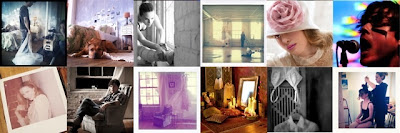
TBS: How about the set and the props for the shoot?
Bob: The sets were created by Jennifer Dunlea and Daniel Brisson. I used an empty loft space located in Fort Point, Boston as a base, I was trying to convey the sense of a bohemian loft for most of the action to take place. I did some initial sketches on a napkin and showed them to Jennifer, from there she and Daniel kind of took the concept and ran with it. Seeing as this was a self funded production they came up with some great ideas to help keep the budget in place. I especially loved the idea of creating a room scene using old pallets as walls, I could already visualize a camera dolly move peering through the slats. I would also like to mention that Amanda "created" the amazing dress for Sara to wear. We had discussed the importance of a scene where Sara actually becomes consumed by the "power of the dress". I kind of "suggested" that Amanda take a crack at creating something unique and agreed to take on the challenge.
TBS: Finally, what about the edit?
Bob: Don Packer from EngineRoomEdit.com pulled all the pieces together. Don has a music background and plays a mean sax in his own band as well, so he was really intrigued by not only the visuals and the story-telling but also the mash up of different music genres. I wanted a sense that Sara and Jake were coming from two different worlds, Sara from a more classical background and Jake more from the world of Rock.
TBS: Bob, can we address the art versus making a living issue? Who would “Paper Cranes” apply to as far as growing your client list?
Bob: Not an easy answer to that, this video could be a pretty awesome piece for the client or clothing label open to what I would call “urban grit”. As far as specific clients, Levi’s or Wrangler or perhaps Converse would be clothing lines that come to mind for having a gritty edge and pushing creativity beyond the expected. That’s a bit of the bottom line that shows up quite often in my work: pushing beyond the expected, and making viewers think about imagery or story lines differently. I have always been inspired by combining music and fashion!
Tuesday, August 23, 2011
Shoptastic!

Photo courtesy of Ashley O'Dell
FP: How did “Twelve Chairs” begin? What was the inspiration behind this décor/interior design business?
TC: It all started with an email. "We should open up a shop and interior design studio!" The rest is history. Neither of us really had any pause...we went full steam ahead from that very moment. Having studied interior design together in college and having worked in the design and retail industries we felt that we had the background and experience to pull off the hybrid business. And so far so good!
FP: Why did you choose to settle in Fort Point?
TC: We loved the creative energy, the architecture, the sense of history and most of all the people. Sounds like a killer combination!

FP: Now that you have lived in the area awhile, what do you find most interesting about its indigenous, creative population?
TC: We love the sense of pride that the Fort Point residents have. It's like no other neighborhood in Boston and everyone here really values its history and uniqueness.
FP: What is your favorite local hang-out? We want to catch you in your savvy skirts and seriously swanky slacks? Just look for a pair of young, professional fashionistas in Fort Point and you will know what we mean!
TC: This is a tough one. Here it goes: Sportello for "Bagel Friday," Flour for cookies (Miggy likes ginger molasses and Roisin likes peanut butter), Yada Yada for chai lattes, Lucky's for fish tacos. How did this become all about food!?
FP: We love the greeting card selection! They are so witty! Who makes those? And that killer dining table, where do you find this stuff?
TC: Narrowing down what cards we should carry in the shop was torturous. Their are so many fantastic lines out there that it was nearly impossible to decide. We ultimately settled on Rifle Paper Company, Sycamore Street Press, and Smock. They're a perfect balance of sweet and sassy. The dining table is another one of our favorite pieces. The top is made from salvaged pine from trees that came down in a huge storm in Upstate New York and the legs are industrial pieces from an old factory. The gentleman that makes them can do custom sizes all with unique legs. It's been a very popular piece. We love getting to meet so many interesting and talented people who are behind the items in our shop.


FP: You often have local art that is for sale in the store. Why go local? How would a local artist have the opportunity to show work with you?
TC: We love the fact that Fort Point is such a welcoming, supportive community. We feel so fortunate to have been embraced by the neighborhood and showing local art is one small way we can be supportive, not to mention the artists here are beyond talented. We're so lucky that they're willing to show in our space! We're also extremely lucky to be working with Glovebox. They're the real catalysts behind all of this. Artist members of Glovebox are hand selected by the fabulous Jodie McMenamin to create fantastic exhibits in the shop. We can't wait to start planning the next one!
FP: Beach Vacation or Europe Tour? Definitely a Europe Tour.
TC: We're both too antsy to relax on the beach. Plus we can't get enough of great art and architecture.
FP: Where do you see “Twelve Chairs” in the future?
TC: This is a frequent topic of conversation. We love to brainstorm/ daydream about the future of Twelve Chairs. In the immediate future we plan to have a web-store. More long term goals include our own furniture and home decor lines and maybe a book!
Log onto www.gloveboxboston.blogspot.com on 8/24 to read part 1 of this interview by artist organization, GLOVEBOX
Tuesday, August 16, 2011
| Announcing the MCC 2012 Artist Fellowships Program
| ||
Mass Cultural Council announces the launch of the 2012 Artist Fellowships Program. MCC's Artist Fellowships are competitive, anonymously-judged grants for individual artists, with awards based solely on the artistic excellence of the original work submitted*.
* The Traditional Arts category has additional criteria. See guidelines. |

Tuesday, August 9, 2011
Wendy Shapiro
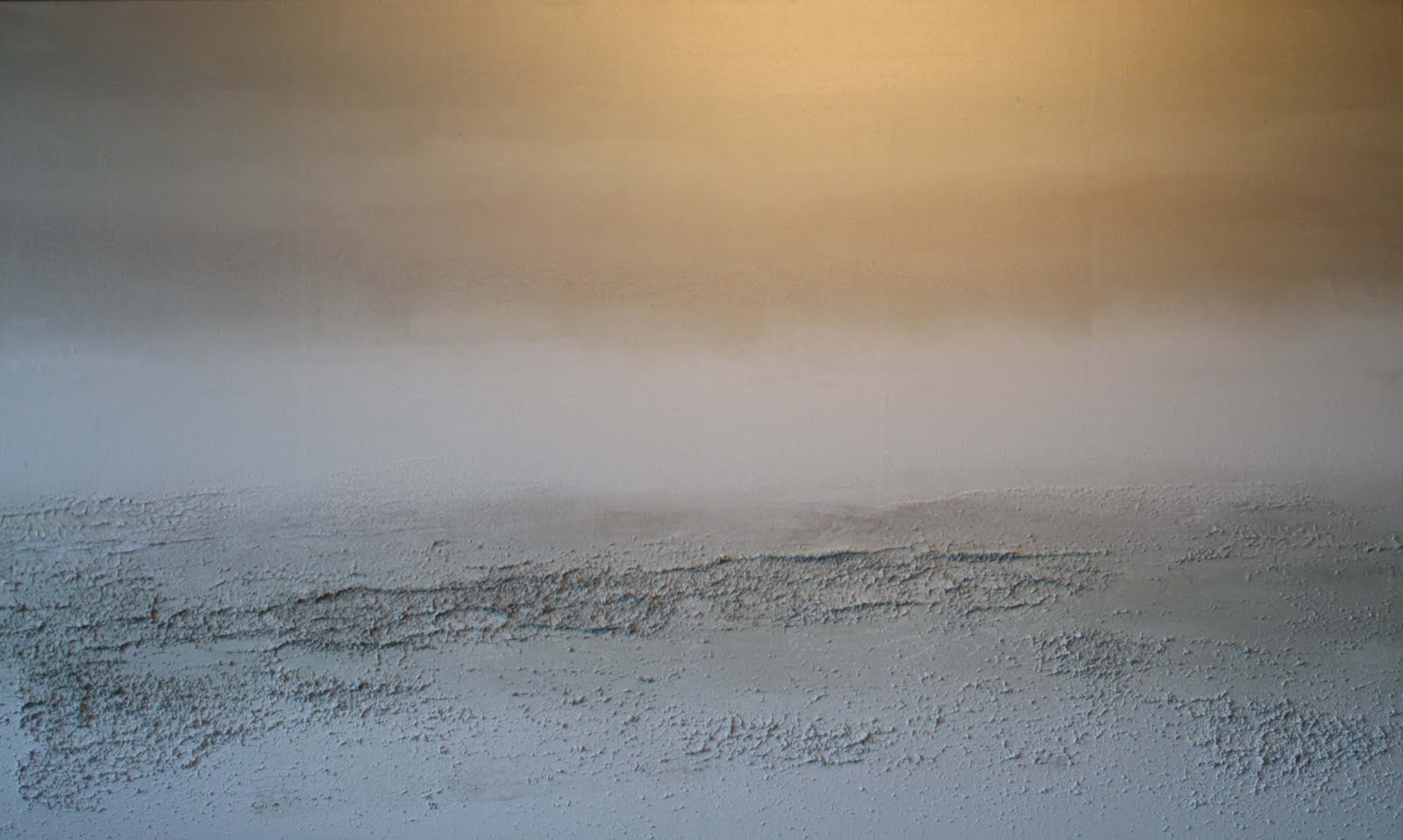
Wendy Shapiro
Reception: Wednesday August 10, 5:30-7:30 pm at 35 Channel Center, Boston MA
Reception: Wednesday August 10, 5:30-7:30 pm at 35 Channel Center, Boston MA
This exhibit is a part of the Fort Point Arts Community's ongoing art lending
program with our neighbors at 35 Channel Center. The work is on display
through August of 2011 and can be viewed by appointment. Contact
www.shapirodesigns.com or www.fortpointarts.org for more information.
Friday, August 5, 2011
What's In My Mind?
You Hold it in Your Mind All the Time
August 11. 2011 through September 30. 2011
Opening Reception - August 11. 2011
5 to 8 PM
Where? Art at 12
12 Farnsworth Street
Opening Reception - August 11. 2011
5 to 8 PM
Where? Art at 12
12 Farnsworth Street
 Michele Jaquis - It's Not You, I'ts Me
Sarah Rushford - Lens Portrait

Artists: Michele Jaquis , Heidi Kayser, Jeremy J. Quinn,
Sarah Rushford, Tom Wojciechowski and Marguerite White
HK: The title for show references a … thought you wanted to say but didn't, the elephant in the room, the growing kernels of ideas you carry with you. It's about collective consciousness versus individuality, and your body vs. your mind, and you versus them.
SR: The word "proprioception" is really where this show began … It is the sense we have as humans that tells our own body where it is in space, how to fit our bodies into spaces in the world, how much pressure to exert on the objects. Proprioception is reflexive; the body is giving the body information about itself…related to the notion that the body is our infinitely personal, private selfhood, and also a physical object in the outside world.
FP: In a broad sense, it seems the artwork makes the viewer ask larger questions - Why am I here?, What is it all about? Was this something that was intentional or came to understanding after the work was gathered in a single room?
SR: All powerful art asks big questions, in specific, personal, and ideosyncratic ways. We knew which kind of big ideas we were talking about… we sought work that was highly specific, smart, not didactic, understated, mysterious, and made with great skill
FP: How did you come up with the title of the exhibition?
SR: "You hold it in your mind all the time" It's a sentence that is about the material world and about the immaterial world at once. How can one hold something in one's mind? An idea is not an object, but though convention and cultural metaphor we understand an idea as something you can hold onto. This play between the material and the ephemeral nicely parallels the other sets of dualities in the show…
FP: What is the relationship between the artists, how did you all decide to come together on this project?
SR: Heidi Kayser and I have worked together for the past several years on collaborative works for example Proprioceptive Refraction, which addresses proprioception. Jeremy Quinn and Michele Jaquis are LA based artists I've collaborated with in a group called Rise Industries an international forum for exchange between artists and a starting point for interdisciplinary collaborative projects. Their works immediately spoke to the themes I discussed above. Tom Wojciechowski is a Boston artist whose work we were made aware of through our contact with Art at 12. Tom's compelling photographs practically jumped off the screen… with his level of connection to the themes the show addresses and Marguerite White's approach is representational and has narrative elements, a much different approach than other work in the show, and further expands our ideas about this theme.
MJ: I haven't met all the artists … however Jeremy and I are married and have shared a studio space since 2000. We went to undergrad with Sarah and used to all be roommates back in Hartford during the late 90's. As one half of Rise Industries, the three of us have collaborated in various ways for years.
FP: You explain the show as "multidisciplinary contemporary art practice." Can you tell me more about this? I guess what I am asking is if you felt traditional art methods could not explain the concept in the way that you wished it conveyed? AND what contemporary art offers to the viewer?
SR: I define contemporary art practice as a way of working that begins with an idea or concept then is adapted to fit a medium. This is a change from the definition of traditional art practice in which artists are defined as "painters,” "sculptors," etc. Defining the work as contemporary art practice acknowledges that multi-disciplined does not mean unfocused, it means that the concept of the work is the foundation of the work and the artists are masters of many crafts.

Sarah Rushford - Quickening
MJ: As the Director of Interdisciplinary Studies at Otis College of Art and Design, I am always encouraging my students that it is good (and almost necessary) to work in a range of media and disciplines - I think the wider the range of technical skills and sets of knowledge one has, the more ways in which you are able to express yourself as an artist and the more employable you are (which is a growing concern of my students and their parents). I think it is a very "old school modernist" way of thinking about oneself as merely a "painter, sculptor or photographer."
I was trained as a sculptor, but quickly realized I was drawn to the expanded field of sculpture that included installation, performance, video and other conceptual forms. This training in drawing, welding, mold-making, sewing, video editing, etc., paired with a conceptual/issue based practice is similar to what Sarah described. I often start with the idea then decide the best media to get that idea across. Although in the last 13 years or so most of my work has been video-based I resist being labeled as a "video artist,” and that resistance gives me the freedom to make work that doesn't involve video from time to time (like the mask). In grad school, my peers and I spoke often about "sculptor's guilt" - the need to make things with our hands, smell the woodshop and hear the sounds of a MIG welder. I get that urge after working on the computer a lot, and then have to move around and do something physical. In our "post-post-modern times" artists can push the boundaries of the traditional art disciplines and still create a solid body of work with conceptual threads that tie it all together.
FP: I couldn’t agree more with that last sentence! What do you hope the viewer leaves with when they have experienced this show?
SR: I am touched by a quote from art theorist, Gabriele Brandstetter: “The body is a being of two leaves; from one side a thing among things and otherwise what sees and touches them.” and I hope that someone who sees and interacts with the show can apply that idea to their personal understanding of their own body and their own self in the world.
FP: Ultimately, how has the art in this show encouraged you to expand on your own work?
SR: This show has taught me that my work is heading in the direction of my piece "The lining of your coat." It is a spoken word piece. A recording of me reading …about someone who has a supernatural ability to mend the linings of people's coats, without even touching them. It’s magic realism…I will be writing more and recording more in the future, working with sound, and this show has pointed me in that direction! SR: I've also tremendously enjoyed calling on my colleagues, and new artists I've met, to put their work in a show I am organizing, it's an honor to be showing work with these artists I admire so much.
FP: A fun one! What is your favorite local FP joint where we can find you relaxing on some down time, contemplating all these life questions?
SR: I actually live in JP and have a studio in the South End. When in Fort Point I like to hang out at Made in Fort Point, and Art at 12! When in the South End, I love to relax by visiting galleries, Carroll and Sons and Howard Yezerski are some of my favorites. When in JP, the new bookstore at Tres Gatos is a real gem!
HK: My favorite local FP place is in the channel, sitting quietly in my kayak, watching the day go by.
FP: Thank All!! Looking forward to the show!
Tuesday, July 26, 2011
iLove iPhone Apps: Photo(s) of the Month


*Have some photos you want to share? Every month, FPAC features a photo on the blog. Send your photos along with any description, your website or link, and what the photo(s) was taken with to jodiebaehre@hotmail.com. Be sure to include your name. You could be featured next month!
Thursday, June 30, 2011
Interview "Lost and Found"

Nataliya Bregel and Maggie Connors at the opening reception for Lost and Found

Above Photo Courtesy Of : Daniel J van Ackere

"Lost and Found" opening reception

"Lost and Found" opening reception
The ladies behind "Lost and Found" share their story:
Maggie Connors &
Nataliya Bregel
FPAC Gallery.
300 Summer Street.
On Exhibit until July 1. 2011
FPAC: What is the concept behind "Lost and Found: and where did this concept stem from?
NB: Maggie and I have known each other and each other's work for some time now. Though much in our work is different, much is the same. We both have an intensive process that comes from printmaking (for Nataliya) and sculpture (for Maggie) as well as painting. Additionally we both have an involvement in drawing and mark-making throughout the painting process.
FPAC: So the "Process" of the work has been the catalyst behind the exhibition?
MC: I saw that we both seemed to spend a lot of time editing our paintings. We were working on them long enough for them to have been several paintings in the process...I see that we both use a unique process to create paintings, that develops into paintings that often become intensely layered.
FPAC: What inspires you or what do you find most interesting about each other's work?
MC: I love that Nataliya can be so particular and focuses on very specific details. She immerses herself in her two inch tall paintings and makes them become her life. At the same time she creates a completely different work along side that detailed work, using similar forms, sources and material, but applies the paint freely to map out the general position and motion of forms. In "Lost and Found," the two smallest paintings of Nataliya's are like this. It seems a bit musical to me. In the way that a note can linger and sound wonderful, even if its just part of a whole work - but its only a tiny part of this involved process.
NB: Maggie's work manages to remain open, to improvise and accept passages that unconsciously occur in her paintings. That is something that I am trying to allow more in my work. She has such a deep knowledge of the human body, that the ethereal figures in her paintings (painted completely from memory and from the imagination) are utterly convincing.
FPAC: What is the most difficult thing in the process of creating your work?
MC: the most difficult part of the process is having to leave the studio to go to work but because my work schedule in this economy is so fragmented- I'll have an hour here and there but not a six or eight hour stretch.
NB: Knowing when to stop! I constantly want to get rid of distracting, inessential elements in my paintings, after the initial elements are placed, but the challenge is to do that while still being investigative - not bound by faithfulness to details. In these multiple-frame paintings it is also sometimes hard to develop the individual frames, while still making sure the painting reads as a whole.
FPAC: Who or what is the motivation behind you as an artist?
NB: I think I have an impulse to create narratives...I love the way composing an image creates a world, and I use the process of painting to make sense of that world.
MC: I am inspired by movement of the body, my own body, gestures and postures.
FPAC: When can we expect to see more from you?
MC: I'm participating in the chain letter project at Sampson Projects in July. I'll be adding a few more works to MIFP in July as well. I will be participating in FPAC"S fall open studios third weekend of October, 2011. 15 Channel Center Street, Boston- look for details at http://maggieconnors.com
Saturday, May 7, 2011
Open Studios Sneak with Ari Hauben
 Boobs Not Bombs
 Make Fun Not War
"My artwork consists predominately of a style I've developed over the past few years which is essentially painting with newspaper. The content of the articles reinforces what the art is saying. For example, in Boobs not Bombs, the entire plane is made from articles written about current wars being fought across the globe. I like the idea of taking this passing moment, which usually has a one-day life span, and freezing it into permanent relevance." ~Ari Hauben
Want to se more of Hauben's work?
Stop by Fort Point Spring Open Studios. May 6-8th, noon to five on Saturday and Sunday
Hauben's Studio is #211 at 15 Channel Center Street
Saturday, April 30, 2011
It's Coming ...

Art Walk
Friday May 6: 4:00-7:00pm
Saturday and Sunday May 7 and 8: noon-5:00pm
Explore the studios of painters, jewelers, ceramicists, photographers,
sculptors, textile artists, and more. Talk with artists in their studios and discover new works and treasured favorites. Visit Fort Point’s art galleries and creative design shops. Explore Boston’s changing Fort Point and see the unique waterfront warehouse district that is one of New England’s largest arts communities. Enjoy the opportunity to purchase works of art and fine craft directly from local artists.
Artists’ Demonstrations • Talks • Hands-On Activities
It’s also Mother’s Day Weekend, making it the perfect place to
shop with or for your family.
mark your calendars for our Fall Open Studios
October 14, 15 and 16
Thursday, April 14, 2011
Jonathan Stark Featured Artist at MIFP!

FPAC: What is the inspiration behind your work?
JS: All of my work, whether street photography in Paris or working in thestudio with the human form is driven by my desire to communicate what is beautiful and/or important to me. And by beautiful I also mean ugly, in the sense that some of my images will address in a hopefully visually beautiful way "ugly" topics such as human trafficking. I feel I communicate best visually and find photography is the medium that I can bemost clear and expressive in. It is also the medium in which byinteracting with my subjects and collaborators I learn the most about whatI am photographing.
FPAC: "Ugly Topics" made beautiful through photography. It is so hard to communicate topics that need to be heard. You do this so beautifully. There is this great video by musician friends of mine that you would perhaps appreciate: The Click Five, new album about human trafficking.
FPAC: Do you always shoot in black and white, if yes why?
JS: I almost always shoot and print in B&W. For me, art always has at its root an expression of complex and or deep emotions. If my photographs donot have emotional resonance, I feel they are missing their mark. B&W images to me are emotional where as color photographs are representational. I am not saying that there aren't color images that express profound emotions. I mean this as a hopefully very global but accurate observation. For example, if you look at wedding photographs and you see an image of the bride and groom kissing. If the image is in color you think: "There is the bride and groom kissing and you notice their skin tone, their clothes, their hair, the environment around them, all the colors , matching and not matching
 all the colors , matching and not matching
etc." If you look at the same image gray-scaled in B&W your are more likely to simply go:"Ahhh. They're in love". Having said that I am currently working on a project called "Security" that is based in people's choice of attire and I am shooting in color because the subject demands it and I hope the emotional resonance will be there.
FPAC: In this digital age why do you work in film?
JS: I believe that shooting film is a very different process than shooting digitally. Shooting film is an act of faith. You make your setting and then you photograph, engaged in the process of shooting and staying incontact with your subject whether animate or inanimate. You are not constantly checking the back of the camera looking to see if "you got the shot" while "the shot" is actually occurring right in front of you. I work a lot with people who are unclothed, trusting me with the work we are doing. When I shoot film I am in constant contact with them, visually andemotionally. If I were looking at the back of a camera or at a monitor,the trust, the moment, the image would be lost. And the darkroom is a place of mystery and magic. Yes, I think I know the images I am putting inthe enlarger put as the print slowly develops in the chemistry I seethings that weren't there, (sometimes good sometimes not so good) but Iwork slowly, patiently, in a more spiritual manner. To me, this isimportant. And at times I work with multiple exposures and the revelationsthat occur are wondrous to me. To use another analogy, its like the lostart of letter writing and that feeling of getting touchable handwritten correspondence and not just an e-mail. It's not just the physical sensation of the paper, but the obvious time and pace of writing that changes the very nature of what is written.
FPAC: Sounds like you are into traveling! How does this influence your work?
 JS: Traveling, by taking one out of what is familiar simply open's one's eyesand perceptions. From this awakening new and interesting work can occur. There is a sociological construct called marginality, which is a group ofpeople who are part of a society but somehow apart from it. I did a film on people who worked the night shift. Yes, they are a part of or society and we expect them to be there, (e.g. nurses), but these people are seen by society as slightly different and they have different observations about the society they live in. To me, traveling makes me marginal to theculture I am in and I can observe and see things that I cannot in my own comfortable milieu. Hopefully this helps me create different images.
 FPAC: What is the Zipper Project?
JS: The Zipper Project was an exploration of the moments when we decide to reveal ourselves to others, physically and emotionally. This project evolved into a series called Skin Deep that explored this concept furtherbut losing the artifice of clothing and where I used mud as the medium forcovering and revealing. In the past two years this has evolved into thebelief that we can be most powerful when we are the most vulnerable. Arecent show "Hits Back" as well as a benefit exhibition called "StopTraffic" explore this concept of strength through experience in moredepth. I am hoping that images from this body of work can be used to helpaddress and fight human trafficking.
FPAC: Who are your favorite artists? Why?
JS: Krzysztof Kieslowski: His films speak to me of the incredible need forfaith in a world where chance seems to dictate so much. Edward Weston: His photographs are what inspired me to take photographsand to this day when I see his work I smile from the core of my being.
Thursday, March 24, 2011
Michael Eder 35 Channel

Large Abstract Landscapes
Michael Eder


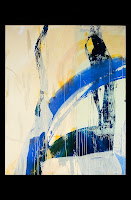
Open by appointment through May: 617.980.2565
Opening Reception: Thursday March 24th from 5-7pm
FPAC is catching up with Michael Eder about his work on view at 35 Channel Center Street:
FPAC- What inspires you to paint landscape paintings? How did it all begin?
ME- I was always drawn outdoors to paint, from college days at RISD 30 years ago, and still today. I love the chaos and energy of working from an enormous still life, even if it's moving and changing. I carry that energy indoors to my studio and finish my larger work there.
FPAC- Rice Fields, Vietnam and the Desert Paintings at 35 Channel Center Street, are both inspired by black and white photos. Why/how did these photos become a focus in your work?
ME- To my surprise I found a similar energy and wealth of ideas in black and white photos that I get from working outdoors. An added bonus is they bring me places I can't go, and allow me to have greater choices in subjects and moods. It began when I came across photos of deserts in the US and tried and found plenty there to inspire larger oil paintings. I then found the photojournalist book from the 70's "Vietnam, Inc" and was inspired by the landscapes surrounding the victims and perpetrators of the war. I made studies in a series of woodcuts, and moved to larger and larger canvases, to better surround the viewer in the mood of the landscape.
FPAC- As an artist who uses color, how did you choose the colors for your paintings when working from black and white photos?
ME- When I paint outdoors I look more at the way light works than at color relationships. I leave those to chance, which can sometimes fail, or it can create surprises. The black and white photos move me in the same way being outdoors can, looking at the drama of lights and darks.
FPAC- How does your medium (oil paint) become parallel in your vision for the final outcome? I guess I am asking, what is it about oils that contributes to your work, what is unique about them? Are all of your works done in oil?
ME- Oils allow me to layer large areas easily, and work the subtleties with the slow drying wet paint. The surface stays "alive" longer. As lights and darks are so important to the final outcome for me, I find oils give me the greatest scope to work with. All my paintings are oils. I also use monoprints and woodcuts for studies, as they are good for layering, and are a great tool for exploring ideas.
FPAC-Your work appears to have many layers, can you tell us a little about your process?
ME- It's mostly intuitive. I refer back to studies, more recently to photos, and to other paintings to help me along. I respond to people's responses, and might continue on a piece for years. More often it takes several months to finish a painting. The layers are not intentional, but are the result of searching for better answers. Failed paintings are usually ones I cover up with color and hide that process of searching.
FPAC- Do you always work in large format? -( all of Eders' paintigns at 35 Channel Center Street are between 5-8 feet )
ME- A majority of paintings in the last 5 years are large. I do many small oils on wood, 12 inch square or so, as
outdoor studies. I also do prints and smaller watercolors. I like the large size because of the fuller experience it can give the viewer.
FPAC- Who is your favorite artist (s) and why?
ME- I constantly change my preferences. Long ago it was Arthur Dove and Hartley. A room full of Kandinsky at the Fogg stuck with me for years, as did a Florine Stettheimer. I love the fragile carvings and watercolors of Anne Chu. I admire many strong artists, like Gerhard Richter and Baselitz, but I love more tentative work.
FPAC- Whats next on the horizon for you?
ME- I'm working on a series on Gettysburg after a visit there last spring. I'm using Mathew Brady's civil war photos to build woodcut studies and currently three large paintings.
Check out Michael Eder's work at 35 Channel Center Street, Fort Point Boston and learn more about him at http://www.michael-eder.com/
All photos courtesy of Michael Eder, except black and white photo- by Phillip Jones courtesy of Vietnam Ink
Subscribe to:
Posts (Atom)